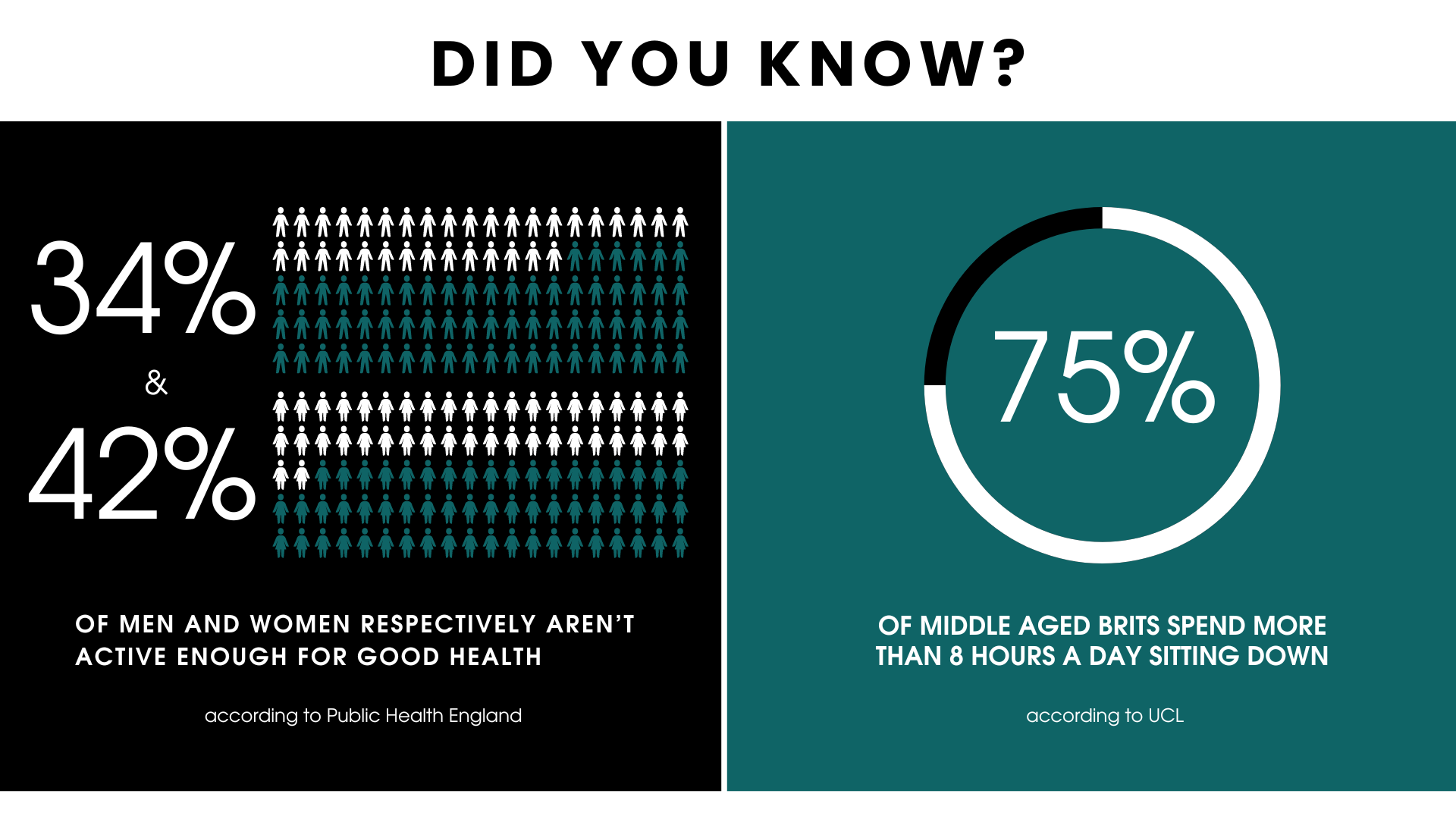
Humans are made to move. From hundreds of bones and muscles to trillions of nerves, our internal networks are geared for movement. Yet today, many of us spend the majority of our days sitting down motionless.
From improving physical fitness and strength, to reducing the risk of chronic diseases, the benefits of leading an active lifestyle are irrefutable. One of the greatest benefits that’s often underestimated is the huge, positive impact exercise has on our mental health.
It’s no wonder therefore, that the theme for Mental Health Awareness Month this year is movement. That little reminder that something as simple as taking a walk can give us a serotonin boost that’ll make us feel better when we’re feeling low or sluggish after sitting down for extended periods of time.
After the hardest, most emotionally challenging year of my life, sitting alone at my desk, in front of the computer screen, shrouded in a cloud of grief and trauma within the same four walls for hours each day was becoming detrimental to both my physical and mental wellbeing.
Needing to transform my sedentary, restricted routine but unable to muster up the motivation to move more within the existing parameters, I decided to leave the corporate job and city life for a remote, off-grid eco community. Having been fascinated by the permaculture lifestyle for several years, now seemed like the right time to finally take the leap and experience it.
There are apparently more than 10,000 eco villages in the world. Robert Gilman, researcher and “sustainability pioneer” describes an eco village as a “human-scale, full-featured settlement in which human activities are harmlessly integrated into the natural world in a way that is supportive of healthy human development and can be successfully continued into the indefinite future.”
Each eco village or off-grid community is unique. But some universal factors are guaranteed. For one, members achieve greater self-sufficiency by relying on biological resources and existing in harmony with nature, rather than through exploiting it. Secondly, there’s a strong network of support, and a sense of purpose and belonging. (And no, not every off-grid community is a cult).
Finally, it’s naturally a physically active way of life. Every member plays an important role in keeping the community alive and running smoothly. Whether it’s growing fresh vegetables in the garden, herding goats, or building homes with bioconstruction methods, there’s plenty of physical work to keep everyone moving.
It’s unplanned and somewhat serendipitous that I’ll be living in an eco village throughout Mental Health Awareness Month this year — and that this year’s theme is “movement”. My main interest in the experience was always to learn about permaculture and truly circular, sustainable living. But the active aspect of the lifestyle will no doubt benefit both my mental and physical health at this particular time in my life.
I’ll be mostly offline for the rest of the month of May, but will be sure to share more stories about the experience of living in the community once I return!





 Emily D'Silva
Leave a comment